
College Football Meets European Soccer Fan Culture
A recent matchday experience in Porto has sparked a detailed comparison between European football culture and American college football traditions, highlighting striking differences in stadium design, fan behaviour, and matchday logistics. According to Britain Chronicle analysis, such cross-cultural sporting experiences increasingly reveal how deeply sport is shaped by infrastructure, transport systems, and fan identity rather
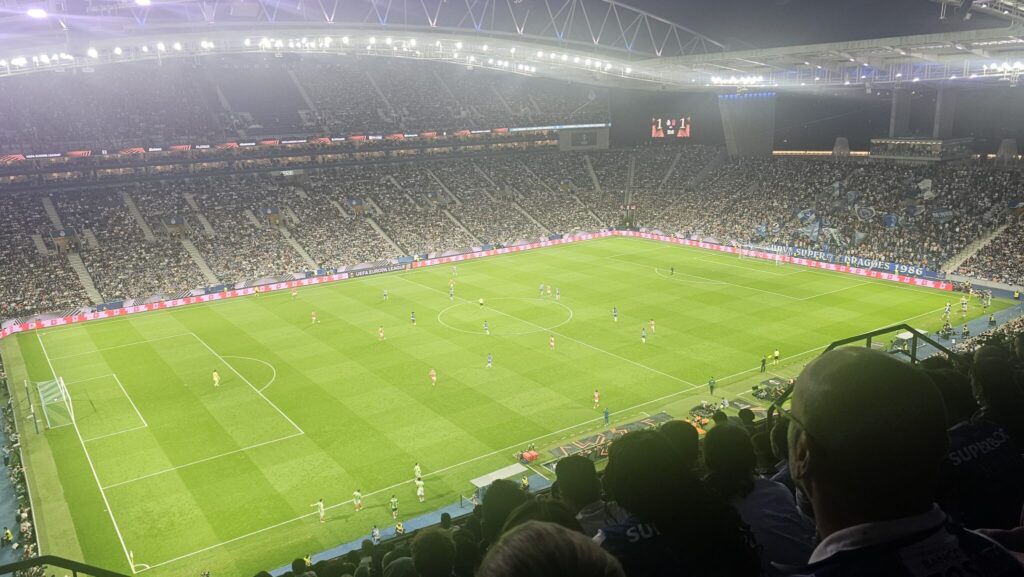
A recent matchday experience in Porto has sparked a detailed comparison between European football culture and American college football traditions, highlighting striking differences in stadium design, fan behaviour, and matchday logistics.
According to Britain Chronicle analysis, such cross-cultural sporting experiences increasingly reveal how deeply sport is shaped by infrastructure, transport systems, and fan identity rather than just the game itself. What appears similar on the surface often operates very differently in practice.
The visit, which included a Europa League quarter-final between FC Porto and Nottingham Forest, offered a rare side-by-side perspective on how two major sporting traditions manage large-scale live events in different parts of the world.
WHAT HAPPENED?
A travelling fan attended FC Porto’s Europa League quarter-final against Nottingham Forest at Estádio do Dragão in Portugal, using the experience to compare European soccer matchdays with decades of attendance at college football games in the United States.
The match, held in Porto’s modern 50,000-capacity stadium, brought together a strong home crowd and thousands of travelling English supporters. Nottingham Forest fans were housed in a heavily segregated section of the upper tier, separated by controlled access points and security zones.
The fan noted that travel to the stadium was smooth compared to previous experiences in England and Spain, with Portugal’s public transport network and ride-sharing options offering cheaper and more efficient access on matchday.
WHY THIS MATTERS
The comparison highlights how sporting experiences are shaped as much by organisation and urban planning as by the sport itself.
European football stadiums, particularly in Portugal and Spain, often prioritise integrated public transport and strict crowd segregation systems. This contrasts with many American college football venues, where car-based access and campus-scale crowd flows dominate the experience.
The differences also reflect broader cultural approaches to sport. In Europe, matchdays function as continuous communal events built around chants, songs, and collective rhythm. In the United States, the experience is more reactive, driven by key moments and structured breaks in play.
These distinctions influence not only fan experience but also safety planning, stadium design, and local economic activity around major sporting events.
WHAT ANALYSTS OR OFFICIALS ARE SAYING
Sports infrastructure observers frequently point out that European football stadiums have evolved under stricter crowd control regulations, particularly following historical safety concerns, leading to highly segmented and tightly managed fan environments.
Transport planners also highlight the importance of integrated public transit in European cities, where matchday planning is often built into wider urban mobility systems rather than treated as an isolated event.
Meanwhile, American college sports environments are often described as more decentralised, with greater reliance on private vehicles and campus-based logistics, creating different pressure points in crowd movement and access control.
BRITAIN CHRONICLE ANALYSIS
The Porto experience underscores a broader truth about global sport: the stadium is not just a venue, but a reflection of national systems.
Europe’s emphasis on structured fan segregation and public transport integration produces a highly controlled but efficient matchday environment. It prioritises order, predictability, and collective atmosphere over spontaneity in movement.
By contrast, college football in the United States operates within a more flexible but less centralised framework, where the journey to the stadium can be as significant as the event itself. This creates variation in experience but also introduces logistical inefficiencies that European systems have largely addressed through infrastructure planning.
Neither model is inherently superior, but each reveals how sport is embedded in broader cultural and civic design. The key takeaway is that fan experience is engineered long before kickoff, shaped by transport policy, stadium architecture, and crowd management philosophy.
WHAT HAPPENS NEXT
As global sports continue to expand their audiences, comparisons between different sporting cultures are likely to become more common, especially as fans travel more frequently for international matches and tournaments.
European clubs may continue refining transport-linked stadium access, while American programs may invest further in improving fan flow and safety infrastructure around large college venues.
For fans, the growing overlap of global sports experiences will likely deepen appreciation of how different systems deliver the same core product: live, communal competition in packed stadiums.
USWNT Defeat Japan 2-1 in Opening Series Match

British Soccer Clubs Barred From Traveling to Germany, TCL is Disrupted

Can Wisconsin Clinch the Big Ten West this Weekend

100 Women Race in Hamilton to Win Back a World Record for 1-Mile Relay

Royal Challengers Bangalore Announce Faf du Plessis as New Captain

Cycling and Para-Cycling: Where to Position Yourself to Enjoy the Race?
