Myanmar Five Years After the Coup: Military elections entrench tyranny—time for global isolation?
Five years after Myanmar’s military overthrew a civilian government and plunged the country into crisis, the generals remain firmly in control. The February 2021 coup, which ended a fragile decade-long experiment with semi-democracy, has since evolved into one of Southeast Asia’s most protracted and violent political breakdowns. As the junta pushes ahead with plans for
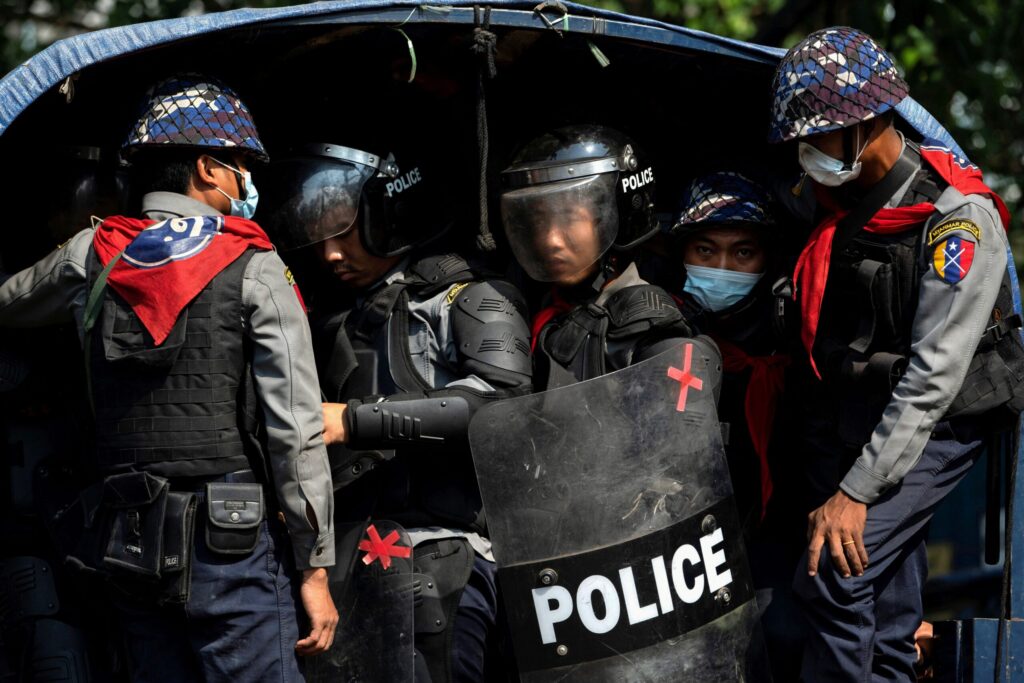
Five years after Myanmar’s military overthrew a civilian government and plunged the country into crisis, the generals remain firmly in control. The February 2021 coup, which ended a fragile decade-long experiment with semi-democracy, has since evolved into one of Southeast Asia’s most protracted and violent political breakdowns. As the junta pushes ahead with plans for military-managed elections, critics warn that the process is designed not to restore democracy, but to legitimize authoritarian rule under a civilian façade. The question facing the international community is increasingly stark: should engagement give way to comprehensive global isolation?
A Nation in Prolonged Conflict
Since the coup, Myanmar has descended into widespread armed resistance. What began as mass protests and civil disobedience was met with lethal force, mass arrests, and systematic repression. Over time, resistance hardened into armed struggle, with People’s Defense Forces aligning—sometimes loosely—with long-standing ethnic armed organizations.
The result is a fragmented civil war stretching across large parts of the country. The military has relied heavily on airstrikes, artillery, and scorched-earth tactics, particularly in ethnic minority regions. Civilian casualties have mounted, infrastructure has been destroyed, and millions have been displaced internally or forced to flee across borders. Five years on, no credible pathway to peace has emerged.
The Illusion of Elections
Against this backdrop, the junta has announced plans to hold national elections, presenting them as a step toward stability and a return to “disciplined democracy.” In reality, these elections are widely viewed as a tool to entrench military power.
Opposition parties have been dissolved, including the National League for Democracy (NLD), whose leaders remain imprisoned or in hiding. Media outlets are tightly controlled, independent civil society has been crushed, and large parts of the country are effectively war zones where voting would be impossible. Any election conducted under such conditions lacks basic legitimacy.
The military’s own constitution already guarantees it decisive control, reserving key ministries and parliamentary seats for unelected officers. A junta-run election would merely provide a civilian veneer to continued military dominance, not a genuine transfer of power.
Economic Collapse and Humanitarian Crisis
The political crisis has triggered severe economic decline. Foreign investment has dried up, the currency has weakened, and poverty has surged. Key sectors such as manufacturing, tourism, and agriculture have been disrupted by insecurity and labor shortages. Ordinary citizens bear the brunt, facing rising prices, job losses, and limited access to healthcare and education.
Humanitarian conditions are dire. Aid delivery is obstructed by conflict, bureaucratic restrictions, and the military’s suspicion of international organizations. In many areas, assistance is politicized or blocked entirely, deepening suffering among already vulnerable populations.
Regional and Global Responses Fall Short
International reactions over the past five years have been uneven. Western countries imposed targeted sanctions on military leaders and state-linked enterprises, while offering diplomatic recognition to opposition representatives. However, these measures have not significantly altered the junta’s behavior.
Regional responses have been even more cautious. ASEAN, bound by its principle of non-interference, has struggled to move beyond statements and limited mediation efforts. Its “Five-Point Consensus” has failed to curb violence or foster dialogue, undermining the bloc’s credibility.
Meanwhile, the military continues to find diplomatic and economic lifelines through neighboring countries and global powers willing to prioritize strategic interests over democratic norms.
The Case for Global Isolation
As the junta advances toward staged elections, calls are growing for a tougher international stance. Advocates of global isolation argue that continued engagement only legitimizes an illegitimate regime. They propose expanding sanctions, restricting arms transfers, limiting diplomatic recognition, and cutting off revenue streams that fund military operations.
Crucially, proponents emphasize that isolation should target the military leadership and its economic networks—not the population. Support for cross-border humanitarian aid, refugee protection, and engagement with democratic opposition groups would need to be strengthened in parallel.
Critics warn that isolation could push Myanmar further into dependency on a narrow set of allies and worsen civilian suffering. Yet after five years of escalating violence and failed diplomacy, many argue that the current approach has already failed.
A Defining Moment
Myanmar’s planned military elections represent a critical juncture. Accepting them as legitimate risks normalizing tyranny and rewarding repression. Rejecting them—and backing that rejection with coordinated international action—would send a clear signal that democratic principles are not negotiable.
Five years after the coup, the reality is undeniable: Myanmar’s military has no intention of relinquishing power voluntarily. Whether the world continues cautious engagement or moves toward decisive isolation may shape not only Myanmar’s future, but the credibility of global commitments to democracy and human rights.
Vaccine Autonomy vs. Public Health: Should polio and measles shots really be optional in 2026?

The DOGE Data Scandal and Fed Independence: Why Musk’s team accessing private records threatens democracy

Immigration Crackdowns in Minnesota: When enforcement crosses into racial profiling and state rebellion

From Ceasefire to Reconstruction in Gaza: Why U.S.-brokered deals risk becoming another illusion of peace

Trump’s Paris Agreement Exit: A shortsighted betrayal that leaves the Global South to pay the climate price